

What do London landlords need to check to stay legally compliant and avoid fines?
If you rent out a property in London, there are several legal responsibilities you must meet before and during any tenancy. These include getting the right permissions, completing safety checks, and keeping up with required paperwork. If you miss any of these steps, you could face fines or legal action. This checklist helps you stay on top of your rental compliance obligations and landlord responsibilities.
What We Have Covered In This Article?
- What do London landlords need to check to stay legally compliant and avoid fines?
- Confirm Your Right to Let: Mortgage, Lease and Permission Checks
- Check Your Licensing Obligations Across London Boroughs
- Secure an Up-to-Date EPC (Energy Performance Certificate)
- Book a Gas Safety Inspection and Keep Annual Records
- Get a Valid EICR: Electrical Installation Condition Report Explained
- Install and Test Smoke and Carbon Monoxide Alarms
- Complete Right to Rent Checks and Tenant Referencing
- Protect the Deposit Correctly and Issue Prescribed Information
- Keep the Property Habitable: Repairs, Mould, and HHSRS Compliance
- Work with a Letting Agent to Stay Fully Compliant

Confirm Your Right to Let: Mortgage, Lease and Permission Checks
Having the keys does not always mean you can legally let the property. Before you market or sign a tenancy agreement, make sure you are allowed to rent it.
What to check | Why it matters | What to do if unsure
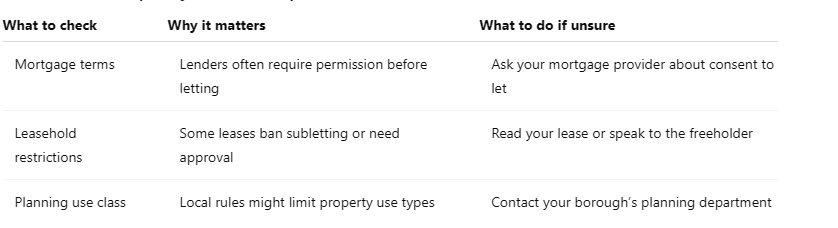
If you skip this step, you could breach contracts or planning rules without realising. Before signing a tenancy agreement, ensure you have met all letting rules relevant to your property type and area.
Check Your Licensing Obligations Across London Boroughs
Licensing rules differ across London. What is legal in one area might not be in another.
Types of licences
Selective licensing: This is often required for any rental in certain areas
Additional licensing: This applies to smaller HMOs that do not meet the mandatory threshold
Mandatory HMO licence: This is needed if five or more people share a home and are not a single household
Examples by borough
Newham: This borough requires selective licences across the entire area
Brent: This borough operates both additional and selective schemes
Kensington and Chelsea: Only specific HMOs need a licence here
How to check
Look up your borough’s rules or visit the London Property Licensing website. Renting without a required licence can lead to fines or rent repayment claims.
Pro Tip:Always double-check with your borough council before assuming no licence is needed. Rules vary even between neighbouring postcodes.
Ehab Barrain
Managing Director at Barrain Estate Agents London
Speak to a Local Agent
Want help from someone who knows your area and your market? Our experienced agents are ready to talk.
Secure an Up-to-Date EPC (Energy Performance Certificate)
You need an EPC to show how energy efficient your property is. It must be provided before advertising.
Key points
The minimum EPC rating allowed is E
Certificates last for ten years
Failing to provide one could lead to a fine of £5,000
Future laws may increase the minimum rating to C
Booking an EPC
Visit the EPC Register to find an assessor
Schedule the inspection
Share the report with prospective tenants
Improving insulation or heating can help your property meet the required rating.
Book a Gas Safety Inspection and Keep Annual Records
Any property with gas appliances needs annual checks to remain legal.
Steps to take
Hire a Gas Safe registered engineer
Obtain a CP12 certificate after the check
Provide a copy to tenants within 28 days
Keep copies for two years
Boilers, flues, and gas cookers must all be inspected. If you miss this step, you could face fines or legal issues.
Get Full Letting Management with Legal Coverage
We handle EPCs, licensing, safety checks and more so you don’t have to.
Get a Valid EICR: Electrical Installation Condition Report Explained
EICRs are required every five years for rented homes. They confirm that electrical systems are safe.
What is involved
An electrician inspects wiring, sockets, and the fuse board
Any issues must be fixed before letting
PAT testing is not required but can be helpful for appliances
EICR vs PAT testing
| Check Type | What it includes | Required? |
| EICR | Wiring, sockets, fuse board | Yes |
| PAT | Portable appliances such as kettles | No, but recommended |
Use a certified professional to carry out an EICR report and keep your documentation safe. Regular checks help you stay in line with electrical safety compliance standards.
Install and Test Smoke and Carbon Monoxide Alarms
Smoke and carbon monoxide alarms are simple to install and essential for safety and legal compliance.
What you must do
Fit smoke alarms on each storey used for living
Add carbon monoxide alarms to rooms with gas boilers or solid fuel heaters
Maintenance tips
Check alarms before a new tenancy begins
Ask tenants to test them monthly
Replace any that are broken or have expired
Following these rules protects tenants and helps you avoid legal penalties.
Pro Tip: If you’re unsure about deposit deadlines, aim to protect it on the same day you receive it to avoid fines.
Ehab Barrain
Managing Director at Barrain Estate Agents London
Complete Right to Rent Checks and Tenant Referencing
Landlords must check that tenants are allowed to rent in the UK.
Acceptable documentation
A valid passport from the UK or Ireland
A Biometric Residence Permit
A share code and date of birth via the Home Office portal
Steps to follow
Check documents in person or online
Make and date copies
Keep them for at least 12 months after the tenancy ends
Visit the GOV.UK Right to Rent portal for full guidance.

Protect the Deposit Correctly and Issue Prescribed Information
You must protect the deposit within 30 days and give the tenant all required details.
What you must do
Use a government-backed scheme such as DPS, TDS, or MyDeposits
Provide:
Confirmation of protection
Prescribed information
Terms and conditions of the scheme
Why it matters
Missing the deadline can cost you up to three times the deposit
You cannot issue a valid Section 21 notice without completing this step
Deposit checklist
| Task | Completed |
| Protect the deposit in a government-approved scheme | [ ] |
| Send prescribed information to tenants | [ ] |
| Keep evidence of what you sent and when | [ ] |
Keep the Property Habitable: Repairs, Mould, and HHSRS Compliance
The property must be fit to live in. This means keeping it safe and addressing any hazards.
Common hazards
Damp or mould caused by poor ventilation
No working heating or hot water
Exposed wires or damaged sockets
Unsafe stairs or handrails
Pests or persistent leaks
You are responsible for ensuring the home meets standards in the Homes (Fitness for Human Habitation) Act 2018. Councils use the Housing Health and Safety Rating System to assess risks and can act if tenants complain.
Work with a Letting Agent to Stay Fully Compliant
Managing legal tasks can be time-consuming. A letting agent may be able to handle these for you.
What a letting agent might offer
-
Regular property checks
-
Management of EPCs, EICRs, CP12s, and alarms
-
Handling of deposits and tenancy checks
-
Support with Right to Rent and licensing steps
Ask these questions
-
Are you Propertymark-accredited?
-
Do you have Client Money Protection?
-
Will you manage legal checks for me?
Working with a reliable agent can reduce your workload and legal risk.

